
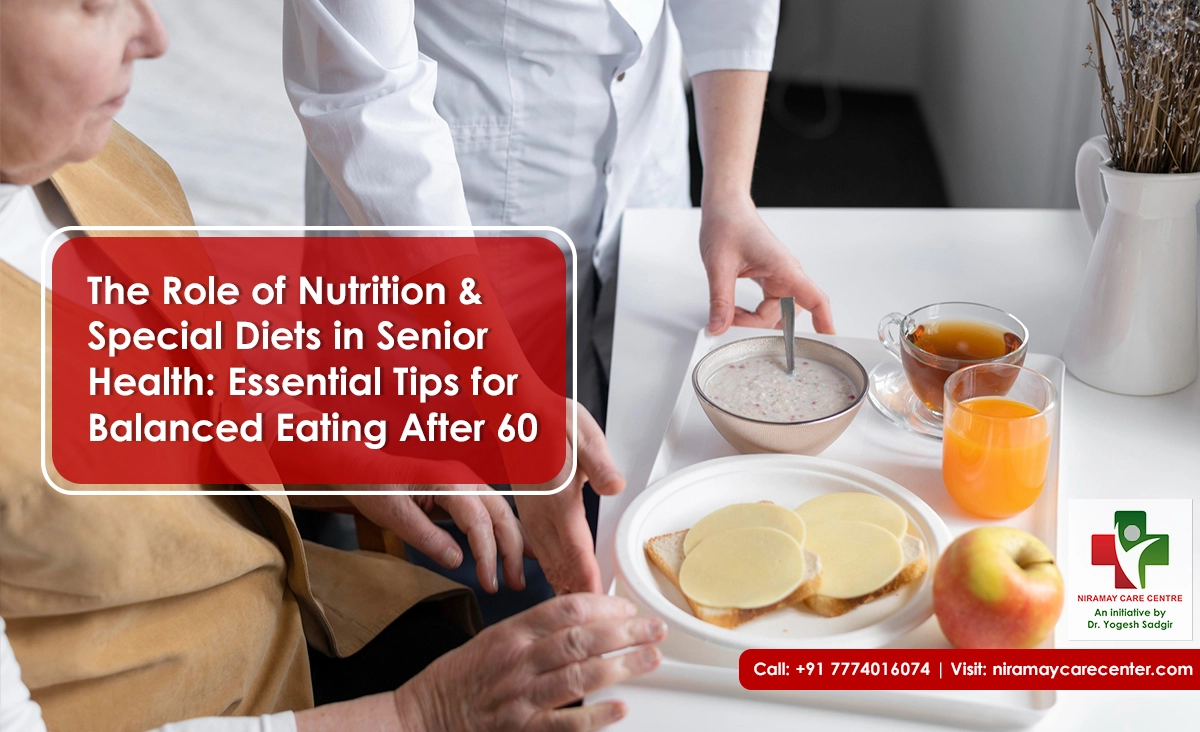

Nutrition plays one of the most important roles in healthy aging. After the age of 60, the body undergoes several changes—slower metabolism, reduced appetite, weaker immunity, digestive issues, muscle loss, and increased risk of chronic diseases.
That’s why seniors require a special, well-balanced, and easy-to-digest diet to stay active, healthy, and emotionally strong.
At Niramay Care Centre, we focus on creating individualized diet plans that support both physical and mental well-being of seniors. Here’s a detailed guide on the importance of nutrition and the best dietary practices for the elderly.
Why Nutrition Is Important for Seniors
✔ Supports immunity
A nutrient-rich diet helps fight infections, speeds healing, and improves disease resistance.
✔ Helps maintain muscle and bone strength
Protein, calcium, Vitamin D, and magnesium keep bones strong and prevent muscle loss (sarcopenia).
✔ Supports brain and memory health
Omega-3 fats, antioxidants, and vitamins protect mental clarity and reduce the risk of dementia.
✔ Improves digestion and gut health
Fiber-rich foods prevent constipation, bloating, and indigestion.
✔ Helps manage chronic conditions
A proper diet keeps diabetes, blood pressure, heart disease, and cholesterol under control.
Essential Nutrients for Seniors After 60
1. Protein
Important for muscle repair and preventing weakness.
Sources: Dal, curd, paneer, eggs, chicken, fish, sprouts.
2. Calcium & Vitamin D
Improves bone density and prevents fractures.
Sources: Milk, ragi, sesame seeds, sunlight.
3. Omega-3 Fatty Acids
Boosts brain and heart health.
Sources: Flaxseed, walnuts, fatty fish.
4. Fiber
Supports digestion and prevents constipation.
Sources: Oats, fruits, vegetables, whole grains.
5. B-Vitamins
Improve energy levels and memory.
Sources: Whole grains, pulses, green leafy vegetables.
6. Fluids
Hydration is essential to prevent fatigue and confusion.
Sources: Water, soups, buttermilk, coconut water.
Special Diet Guidelines for Seniors
1. Eat Small, Frequent Meals
Helps digestion and boosts energy.
2. Low Salt and Low Sugar Diet
Prevents blood pressure fluctuations and manages diabetes.
3. Soft & Easy-to-Chew Foods
Important for seniors with dental issues.
4. Low-Oil, High-Nutrient Meals
Steamed or lightly cooked food is easier on the stomach.
5. Reduce Red Meat & Fried Foods
These can increase cholesterol and inflammation.
6. Include Antioxidants Daily
Fruits like blueberries, apples, papaya, and green tea keep cells healthy.
Healthy Meal Ideas After Age 60
- Morning: Warm water + soaked nuts
- Breakfast: Oats/Poha/Upma + fruits
- Lunch: Chapati (multigrain), dal, vegetables, curd
- Evening: Soup/fruit bowl
- Dinner: Khichdi, vegetable stew, or soft roti with sabzi
Nutrition at Niramay Care Centre
At Niramay, diet plans are:
✔ Personalized according to health condition
✔ Designed by dietitians
✔ Safe, nutritious, and balanced
✔ Focused on immunity, digestion, and strength
✔ Regularly monitored based on medical reports
Our mission is simple—
To help seniors live with dignity, strength, and good health.
Conclusion
Good nutrition is not just food – It is medicine, healing, and emotional support for seniors.
Balanced eating after 60 can prevent diseases, boost energy, and improve the overall quality of life.
Families must ensure that elderly loved ones receive the right meals, at the right time, in the right quantity.





Leave a Reply